
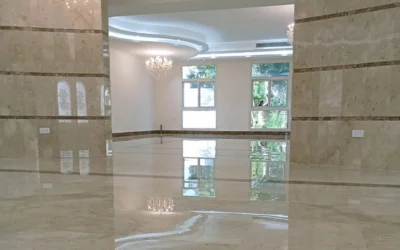
Choosing the flooring stone for a Dubai villa or apartment is a decision that will shape both the property's appearance and its maintenance demands for decades. Marble and granite are the two natural stones most frequently specified across the UAE's premium residential communities, yet they behave very differently once exposed to Dubai's extreme heat, high indoor humidity, and abrasive seasonal dust. Understanding how each stone actually performs in this specific climate — rather than relying on generic stone-care advice written for temperate countries — is essential to making a decision that protects your investment. This guide compares marble and granite across durability, maintenance, humidity resistance, and long-term value specifically within the context of the Dubai property market.
Understanding Marble and Granite as Natural Stones
Marble and granite are both natural stones prized in luxury Dubai interiors, but they are formed by entirely different geological processes, which explains why they respond so differently to the UAE's climate. Marble is a metamorphic rock formed from limestone subjected to intense heat and pressure, producing the fine crystalline structure and distinctive veining that gives it a soft, luminous appearance. Granite is an igneous rock formed from slowly cooled magma, giving it a much harder, denser crystalline structure composed primarily of quartz, feldspar, and mica.
What Makes Marble Distinctive
Marble's calcium carbonate composition is what gives the stone its characteristic softness, light-reflecting quality, and the graceful veining patterns that make Italian Calacatta and Carrara marble so desirable in Palm Jumeirah and Emirates Hills villas. This same calcium carbonate composition, however, is chemically reactive to acidic substances and more porous than granite, meaning marble absorbs moisture and contaminants more readily unless properly sealed and maintained.
What Makes Granite Distinctive
Granite's quartz-rich composition makes it one of the hardest natural stones commonly used in residential flooring, giving it excellent resistance to scratching, heat, and everyday wear with comparatively little intervention. Granite is also considerably less porous than marble in its natural state, which reduces — though does not eliminate — its susceptibility to staining and moisture absorption in Dubai's humid indoor environments.
A common misconception among Dubai homeowners is that granite requires no maintenance at all. While granite is undeniably more forgiving than marble, unsealed or poorly maintained granite can still absorb oils and stain over time, particularly around sink edges and grout lines. The real distinction is not "high maintenance versus no maintenance" but rather the frequency and intensity of the professional care each stone requires to remain in excellent condition in Dubai's climate.
How Each Stone Performs in Dubai's Climate
Dubai presents a uniquely demanding set of environmental conditions for natural stone — extreme summer heat, continuous air-conditioning humidity, and abrasive shamal dust in winter. The following comparison breaks down how marble and granite each respond to these specific Dubai climate factors.
Extreme Summer Heat
Granite's dense crystalline structure gives it excellent resistance to Dubai's summer heat, with minimal risk of thermal stress or surface damage even under direct sun exposure on outdoor terraces. Marble is more sensitive to sharp temperature differentials, particularly near air-conditioning vents or floor-to-ceiling windows, where repeated expansion and contraction can contribute to hairline surface stress over many years if the stone is not properly maintained.
Indoor Humidity from Continuous Air Conditioning
Marble's higher porosity makes it more prone to absorbing indoor humidity and condensation, which can lead to subsurface staining and biological growth if sealing is not maintained on a regular schedule. Granite's lower porosity offers stronger natural resistance to humidity, though even granite benefits from periodic resealing to guard against long-term moisture penetration around seams and edges.
Abrasive Shamal Sandstorm Dust
Granite's exceptional hardness makes it highly resistant to the fine silica particles carried by Dubai's shamal winds, showing far less surface scratching than marble under the same foot-traffic conditions. Marble is comparatively more vulnerable to this abrasive dust and benefits significantly from professional crystallization, which creates a harder, more scratch-resistant surface layer specifically suited to the UAE's dusty environment.
Acidic Spills and Household Chemicals
Marble's calcium carbonate composition reacts with acidic substances such as citrus juice, vinegar, and many common household cleaners, causing dull etch marks that require professional restoration to remove. Granite's mineral composition is far more chemically stable, making it considerably more forgiving of the acidic spills common in busy Dubai kitchens.
Comparing Maintenance Requirements in the UAE
The single most important factor for most Dubai property owners is how much ongoing professional care each stone demands to stay in excellent condition. The table below summarises the core maintenance differences between marble and granite specifically within the context of Dubai's climate and typical residential use.
| Maintenance Factor | Marble | Granite |
|---|---|---|
| Sealing Frequency | Every 12–18 months | Every 2–3 years |
| Professional Polishing | Recommended annually for high-traffic areas | Rarely required beyond initial installation finish |
| Resistance to Acidic Spills | Low — prone to etching without prompt care | High — minimal reaction to household acids |
| Resistance to Shamal Dust Abrasion | Moderate — benefits from crystallization | High — naturally scratch-resistant |
| Humidity Sensitivity | Higher — requires consistent sealing | Lower — but periodic resealing still advised |
| Daily Cleaning Requirements | pH-neutral products, prompt spill blotting | pH-neutral products recommended, more forgiving |
For Dubai properties where marble is the preferred choice, a structured programme of professional marble crystallization in Dubai paired with nano-sealing protection significantly closes the maintenance gap with granite, extending the time between major restoration visits while preserving the stone's premium appearance.
Durability and Aesthetic Considerations
Beyond raw maintenance schedules, durability and appearance are often the deciding factors for Dubai homeowners choosing between the two stones.
Long-Term Durability
Granite's hardness gives it a natural durability advantage in high-traffic areas such as commercial lobbies, kitchen countertops, and outdoor terraces where scratching and impact resistance are priorities. Marble, while softer, can achieve comparable long-term durability in Dubai properties when supported by a proper annual maintenance plan that includes periodic professional marble polishing in Dubai and crystallization — the stone's reputation for fragility is largely a reflection of inadequate maintenance rather than an inherent limitation of the material itself.
Aesthetic and Design Value
Marble remains the preferred choice for Dubai's most prestigious villa interiors specifically because of its luminous surface and distinctive veining, which granite's more uniform, speckled appearance cannot replicate. Granite offers a broader range of bold colour patterns and a more contemporary, robust aesthetic that suits commercial spaces, outdoor kitchens, and high-traffic residential areas where a more forgiving, textured surface is prioritised over the classic luxury look.
Regardless of which stone is installed, using incorrect cleaning products is the single most preventable cause of premature stone deterioration in Dubai properties. Vinegar, lemon-based cleaners, bleach, and most supermarket floor cleaners are chemically unsuitable for both marble and granite and will degrade sealing protection over time. Always use pH-neutral, stone-safe cleaning products specifically formulated for natural stone.
Cost Considerations for Dubai Properties
Initial installation costs for marble and granite in Dubai are broadly comparable, with pricing driven more by the specific quarry origin and slab quality than by the stone type itself. The more meaningful cost difference emerges over the lifetime of ownership. Granite's lower maintenance frequency generally results in a lower total cost of ownership over the first five to seven years, particularly for commercial properties and rental units where professional restoration visits represent a recurring operational expense. Marble's more frequent professional care requirement represents a higher ongoing investment, but this is typically offset in luxury residential resale value, where buyers in communities such as Palm Jumeirah and Downtown Dubai often specifically seek the classic marble aesthetic and are willing to pay a premium for it.
Choosing the Right Stone for Your Dubai Property Type
The right choice between marble and granite ultimately depends on the specific property type, usage pattern, and maintenance commitment of the owner.
Luxury Villas in Palm Jumeirah, Emirates Hills, and JGE
For premium villa interiors where aesthetic impact is the priority and owners are willing to invest in a structured annual maintenance plan, marble remains the stronger choice — particularly Italian Calacatta or Carrara varieties that define the luxury look these communities are known for. A committed marble restoration in Dubai partner can maintain this aesthetic indefinitely with the right seasonal care programme.
Kitchens and High-Traffic Family Areas
For busy family kitchens where acidic spills and heavy daily use are unavoidable, granite's chemical stability and scratch resistance make it a more forgiving choice that requires less vigilance from household members between professional visits.
Commercial Properties in DIFC, Business Bay, and Sheikh Zayed Road
High-traffic commercial lobbies, retail spaces, and office reception areas generally benefit from granite's durability and reduced maintenance frequency, though many premium hotels still specify marble for feature areas where visual impact justifies a more intensive professional care schedule, supported by crystallization treatments on a quarterly or biannual basis.
Many of our most satisfied Dubai clients use both stones strategically within the same property — marble for formal living areas, entrance halls, and feature staircases where its aesthetic impact is maximised, and granite for kitchens, utility areas, and outdoor terraces where its durability and lower maintenance demands are most valuable. This hybrid approach delivers the best of both stones while keeping overall maintenance costs manageable.