
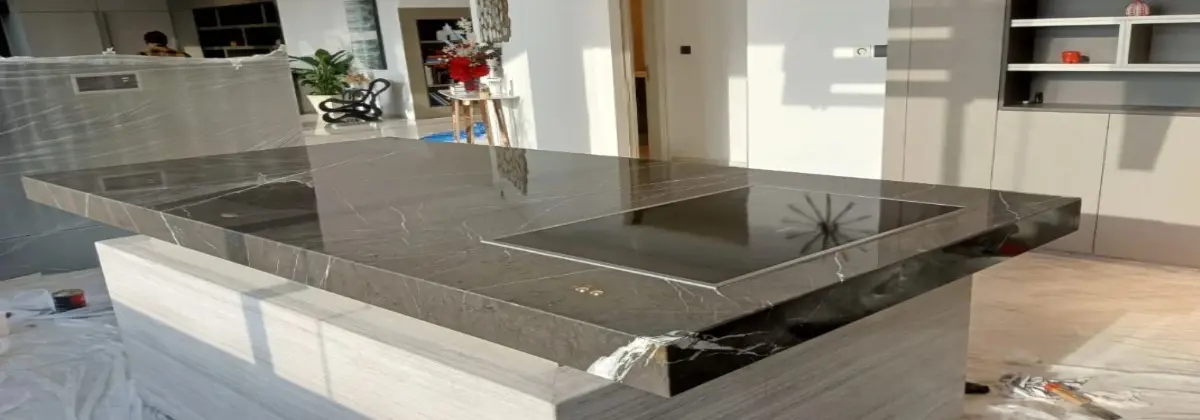
Marble countertops bring a distinctive natural finish to Dubai kitchens, but the same surfaces that look elegant can quickly show etching, stains, dull patches and fine scratches when exposed to daily cooking, spills, hard water and frequent cleaning. Proper marble polishing, sealing and maintenance keep the stone easier to care for while preserving the finish of the kitchen. This guide explains how Dubai homeowners can protect marble countertops without relying on harsh chemicals or temporary shine products.
Why Marble Kitchen Countertops Need Special Care in Dubai
Marble is a natural calcium-based stone rather than a chemically resistant manufactured surface. Its beauty comes from its mineral structure, veining and natural variation, but that composition also means acids can etch the surface and abrasive particles can create fine scratches. In a busy Dubai kitchen, countertops face repeated contact with coffee, citrus, tomato, oils, spices, water and cleaning products.
Dubai's environment adds another layer of maintenance. Fine dust can be carried indoors, mineral-rich water can leave deposits around sinks, and constant air-conditioning can create changing temperature and moisture conditions. A practical stone care programme therefore needs to address both everyday kitchen activity and the local climate.
Heat, Spills and Everyday Kitchen Traffic
A countertop near a cooker or preparation area may receive hundreds of small contact events each week. Spills are often left for several minutes while food is prepared, while cookware, appliances and containers may be moved repeatedly across the surface. These actions do not necessarily create obvious damage immediately, but they can gradually reduce reflectivity and make the stone look tired.
Dubai Hard Water and Sink-Area Residue
Water marks around taps and sink edges are particularly common when water is allowed to dry on natural stone. Mineral deposits can build up as a cloudy residue, tempting homeowners to reach for vinegar or acidic descaling products. On marble, that approach can create etching instead of simply removing the deposit.
The goal of countertop maintenance is not to make marble "indestructible." The professional approach is to control absorption, reduce abrasive wear, remove surface damage correctly and maintain the finish with products designed for natural stone.
Signs Your Marble Countertop Needs Professional Polishing
Marble often gives subtle visual warning before it requires a full restoration. Check the countertop in natural side light or under bright kitchen lighting and look for these signs:
- Loss of reflectivity: the polished surface looks flatter around the most-used preparation areas.
- Visible fine scratches: repeated wiping, abrasive dust or movement of hard objects has created a dull scratch pattern.
- White or cloudy marks: mineral residue or previous cleaning products have changed the surface appearance.
- Acid etching: citrus, vinegar, wine or acidic food has left pale dull spots with a different texture or sheen.
- Darkening after spills: an unprotected or worn-sealer surface absorbs liquids more readily.
- Uneven finish: frequently cleaned or heavily handled sections no longer match the surrounding marble.
Avoid household "marble shine" sprays, abrasive powders and wax coatings that only hide surface wear. Temporary coatings can interfere with later professional restoration and may trap residue on the stone. Genuine marble polishing should correct the surface rather than cover it.
The Professional Marble Polishing Process for Kitchen Countertops
Professional marble polishing in Dubai uses controlled diamond abrasives to refine the surface progressively. The correct process depends on the marble type, existing finish and depth of damage. A typical countertop treatment follows these stages:
Inspection & Surface Diagnosis
The technician checks the marble for scratches, etching, staining, previous coatings, uneven sheen and sensitive areas around sinks, cooktops and edges. This determines whether light polishing is enough or whether honing and deeper restoration are required.
Cleaning and Preparation
Surface contamination is removed before abrasive work begins. Grease, residue and loose particles must not remain between the tooling and the stone because contamination can affect both the finish and the consistency of the result.
Progressive Diamond Refinement
Appropriate diamond abrasives are worked progressively to reduce visible scratches and restore an even surface. The technician controls pressure, sequence and moisture according to the marble rather than trying to create the finish with a single polish.
Crystallization or Final Surface Treatment
Where suitable for the stone and requested finish, professional marble crystallization can enhance surface hardness and reflectivity. The treatment is selected after assessing the existing finish and should not be used as a substitute for correcting deep damage.
Impregnating Sealing and Final Inspection
A compatible impregnating sealer can reduce the rate at which liquids enter the stone. Final inspection checks the uniformity of the finish, edge condition and high-use areas before the countertop is returned to service.
Marble Polishing vs. Marble Sealing: What Is the Difference?
Polishing and sealing are complementary but different parts of marble maintenance. Polishing improves the visible surface finish by refining microscopic scratches and restoring reflectivity. Sealing is intended to reduce absorption and give homeowners additional time to respond to spills.
| Attribute | Marble Polishing | Marble Sealing |
|---|---|---|
| Main purpose | Refines the surface and restores reflectivity | Reduces liquid absorption into porous stone |
| Addresses scratches | Yes, depending on depth | No |
| Addresses etching | Yes, when properly restored | No |
| Stain protection | Indirectly supports a cleanable finish | Helps slow absorption |
| Appearance | Can restore a refined polished finish | Should normally leave natural appearance unchanged |
| Typical use | Surface restoration and finish maintenance | Preventive stone care |
How to Protect Marble Countertops Between Professional Visits
Professional restoration is only one part of long-term stone care in Dubai. Daily habits have a major influence on how long the finish remains attractive.
Clean Spills Quickly
Blot coffee, tea, oils, juices and coloured sauces rather than spreading them across the countertop. The faster a spill is removed, the less opportunity it has to penetrate an absorbent surface or react with the stone.
Use a pH-Neutral Stone Cleaner
Choose a cleaner specifically intended for natural stone. Avoid vinegar, lemon juice, acidic descalers and aggressive powdered cleaners. Use a soft microfibre cloth or non-abrasive pad and remove excess moisture after cleaning.
Use Cutting Boards and Protective Mats
Marble is not the right surface for direct cutting. Knives can leave scratches while hard ceramic, glass and metal objects can create concentrated pressure points. Cutting boards and protective mats create a simple physical barrier between the stone and everyday kitchen activity.
Control Water Around the Sink
Keep the sink perimeter dry where practical. Repeated evaporation can leave mineral deposits, while standing water around seams and edges increases the opportunity for staining on porous areas.
The easiest way to protect polished marble is to treat the countertop as a natural stone surface, not as a glass-like worktop. Use compatible products, wipe spills promptly and let professional polishing and sealing handle damage that routine cleaning cannot safely reverse.
Which Marble Types Are Common in Dubai Kitchens?
Dubai homes frequently use visually distinctive Italian, Spanish and Turkish marbles. The same maintenance principles apply broadly, but porosity, mineral composition, colour and veining can influence how visible stains, etching and scratches become.
Calacatta Gold and Carrara can show etching and discolouration very clearly because of their bright backgrounds. Statuario and Arabescato are prized for dramatic veining and require careful surface refinement to keep the finish consistent.
Emperador Dark and Nero Marquina can conceal some staining visually but may reveal haze, residue and scratches under strong lighting. Crema Marfil and other warm-toned stones can be more forgiving visually, but they remain susceptible to acidic cleaners and inappropriate restoration methods.
When Does a Kitchen Countertop Need Marble Restoration?
Marble restoration in Dubai becomes more appropriate when the countertop has damage that routine polishing cannot safely remove. Deep scratches, widespread etching, uneven areas, stubborn stains or changes caused by previous coatings may require a more controlled sequence of honing, polishing and protective treatment.
A professional should also assess edges, corners, seams and sink cut-outs. These areas can require different tooling or hand-finishing techniques than a large flat section of countertop. The objective is a uniform result that looks natural from multiple viewing angles.
How to Choose a Marble Care Company in Dubai
Kitchen countertops are high-visibility surfaces, so workmanship matters. Before approving a service, ask how the company diagnoses the stone, which diamond process is used and whether the proposed sealer is appropriate for your specific marble.
- Ask for comparable countertop work: request examples involving similar marble and finish requirements.
- Confirm the process: professional polishing should involve appropriate diamond abrasives rather than wax or cosmetic spray alone.
- Discuss the sealer: confirm whether the product is an impregnating sealer and whether it is suitable for the stone and kitchen environment.
- Ask what the quote includes: clarify whether cleaning, stain treatment, polishing, edge work, crystallization and sealing are separate stages.
- Protect adjacent finishes: professional work should include practical precautions for cabinetry, splashbacks, appliances and flooring.